A computational study of BRAF-related resistance in tumors that stop responding.
BRAF-Δ is our computationally prioritized candidate series: small-molecule scaffolds designed in silico to engage a proposed alternate BRAF pocket implicated in resistance in melanoma and glioblastoma. Predicted properties are not yet experimentally confirmed. We are seeking CRO and academic partners — and a $100K Phase-1 target — to fund the proposed wet-lab validation plan.
$100K is the target amount we are seeking to fund the proposed Phase-1 wet-lab validation plan below. No SAFE, grant, or donation is confirmed at this stage; any commitments will be reported here explicitly once documentation is signed.
Mechanism
Resistance Bypass
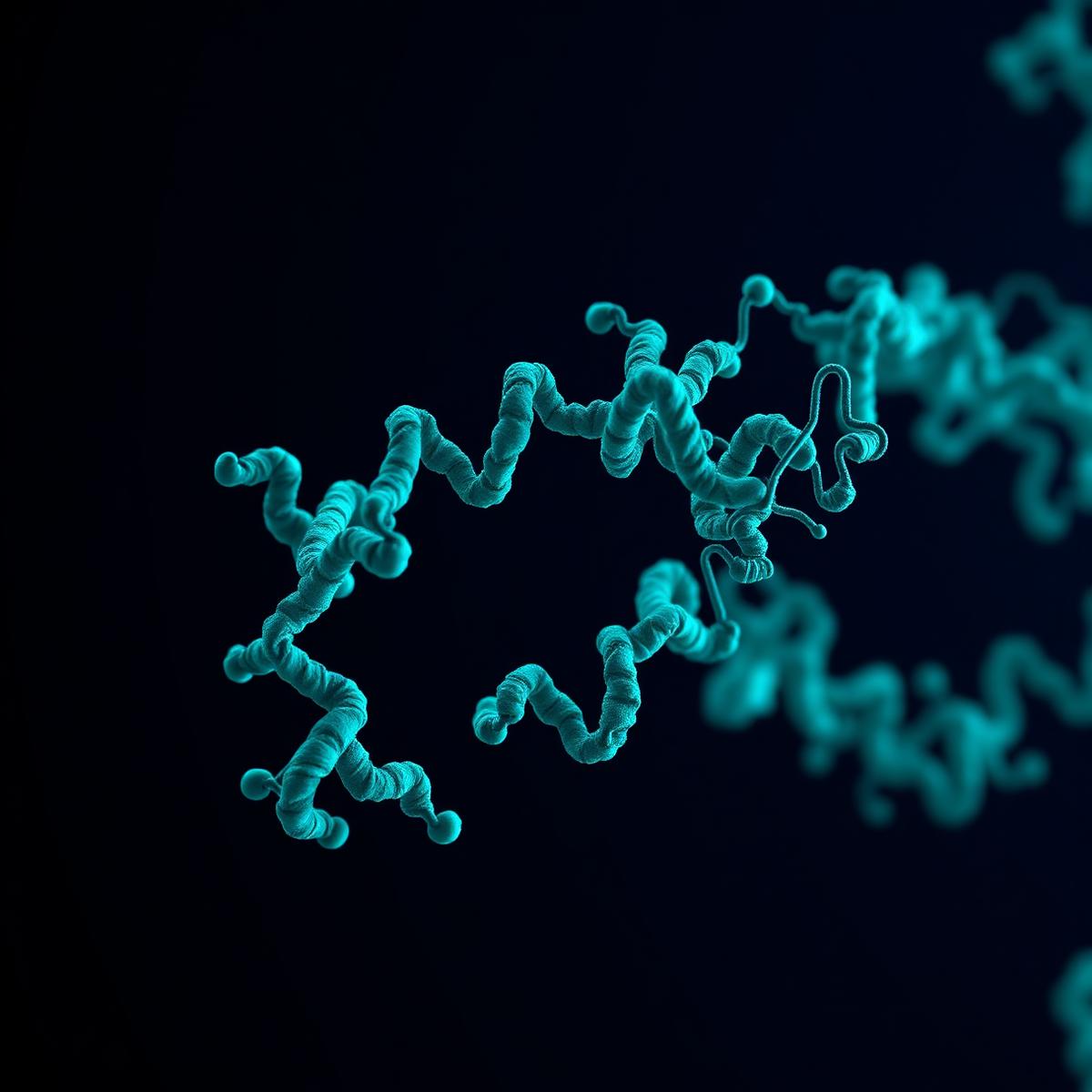
Current BRAF inhibitors (vemurafenib, dabrafenib) lose potency as tumors evolve MAPK reactivation. Our working hypothesis is that an alternate hydrophobic pocket, less disrupted by common resistance mutations, may be druggable — this is a computational proposal to be tested experimentally.
BBB Permeability
AI-guided lipophilicity and P-gp efflux modeling was used to prioritize scaffolds predicted to be more likely to cross the blood–brain barrier. Predictions are in silico only; BBB permeability has not been experimentally measured.
AI × Wet-Lab Loop
Docking and molecular-dynamics analyses are being used to narrow the candidate set. Wet-lab validation on patient-derived cell lines is a proposed next step and depends on securing CRO and academic partners.
Proposed Use of Funds · $100K target
Design Pipeline
The proposed BRAF-Δ workflow has six stages. Every stage has a stop condition — a specific readout intended to kill or advance the candidate. This pipeline is illustrative of how we plan to operate; most stages beyond in silico work depend on CRO / academic partnerships that are not yet in place.
- Stage 01
Target validation
Literature reviewReview published patient sequencing and literature to assess the BRAF bypass variant as a plausible driver of relapse in melanoma and GBM. This is a literature-based hypothesis, not an original clinical finding.
→ Kill if the variant isn't clinically enriched in resistant tumors.
- Stage 02
In silico screening
In progressScreen scaffold libraries against a modeled alternate hydrophobic pocket with AI-guided docking. Rank on predicted binding pose, pocket coverage, and synthetic accessibility. All results are computational.
→ Advance top 20 scaffolds to molecular dynamics.
- Stage 03
Molecular dynamics + ADMET
Early explorationShort molecular-dynamics runs on the shortlist and predicted ADMET (lipophilicity, P-gp efflux, hERG risk, BBB permeability). All values are model predictions and not experimentally confirmed.
→ Advance ~4 preliminary hits with acceptable predicted ADMET and stable modeled binding.
- Stage 04
Wet-lab synthesis + biochemical assay
Proposed · seeking CROProposed synthesis of the preliminary hits via a CRO partner (not yet contracted) and biochemical IC50 measurement against wild-type BRAF, V600E, and the resistance variant. Selectivity is a hard requirement.
→ Planned: kill any candidate with IC50 > 500 nM on the resistance variant.
- Stage 05
Patient-derived cell line validation
Proposed · seeking academic partnerPlanned testing of survivors on melanoma and GBM patient-derived cell lines, including lines resistant to vemurafenib and dabrafenib, with Western-blot confirmation of MAPK suppression. Requires an academic partner not yet secured.
→ Planned: advance candidates with >50% growth inhibition on resistant lines.
- Stage 06
BBB permeability + preprint
ProposedIf earlier stages produce a surviving candidate, run an in vitro BBB model (e.g. hCMEC/D3) and publish a preprint of the full loop — hits, misses, and the resistance-variant thesis — regardless of outcome. Preprint will only be prepared if wet-lab data exist to support it.
→ Data package prepared for a potential seed round and academic co-development.
How We Optimize
Multi-objective, not single-metric
Every candidate is scored on a weighted composite: potency on the resistance variant, selectivity vs. wild-type BRAF, BBB permeability, ADMET safety, and synthetic tractability. Nothing advances by being brilliant on one axis and broken on another.
Weekly loops, not quarterly reviews
AI proposes → docking ranks → MD filters → wet-lab confirms. The loop closes every week. Each iteration compresses the search space by roughly one order of magnitude.
Kill early, kill loud
Every stage has a hard stop condition written before the data arrives. Sunk-cost bias is the fastest way to burn a $100K round. Failed candidates get published, not buried.
Human-in-the-loop chemistry
AI-generated scaffolds are triaged by a medicinal chemistry advisor before synthesis. Novelty is a feature; unmakeable molecules are not.
Open benchmarks
We benchmark leads against vemurafenib, dabrafenib, and encorafenib on the same resistant cell lines. If we can't beat the standard of care, we say so.
Reproducibility as a first-class metric
Every assay is run in triplicate across two independent operators before it counts. Raw data lands in a public dataset attached to each lab note.
See the two principles in one place.
Live · demo dataMulti-objective scoring and "kill early, kill loud" aren't slogans — they're the weekly stand-up. Move the weights to reflect what you care about (e.g. push BBB up for a GBM-first strategy) and watch the advance/kill list re-sort. The numbers below are illustrative; the mechanic is real.
Score the leads. Watch the decisions move.
- LL-772→ advanceΔ-pyrimidinePOTSELBBBADMSYN8.0compositeLead scaffold — balanced across every axis.
- LL-609→ advanceSulfonamide-quinazolinePOTSELBBBADMSYN7.8compositeCleanest ADMET, highest BBB — potency is the ceiling.
- LL-814watchAza-indazolePOTSELBBBADMSYN7.3compositeBest potency; BBB is marginal — a GBM problem, not a melanoma one.
- LL-931kill · hard stopMacrocyclicPOTSELBBBADMSYN6.6compositeElegant on paper. Unmakeable at CRO scale.
- LL-455kill · hard stopFluoro-pyridinePOTSELBBBADMSYN6.2compositehERG flag + weak selectivity. Killed in stage 3.
- Mon01AI proposes
~30 new scaffolds generated from the current binding-pose priors.
- Tue02Docking ranks
Top 30 → top 10 by pocket fit, pose stability, and synthesizability.
- Wed03MD + ADMET
100 ns MD on top 10 · ADMET model kills anything with a hERG or hepatotox flag.
- Thu04Wet-lab confirms
Survivors go to the biochemical assay bench — IC50 on the resistance variant.
- Fri05Stand-up + kill
This board updates. Advances move to next week's cohort. Kills get published.
Every Friday, this decision board is signed by the medicinal chemistry advisor and posted as a lab note. Advance / watch / kill is on record before the next week begins.
The Vision
BRAF-Δ is a first test of the model, not the destination.
Our ambition is to see whether a small, expert-guided team can move a resistance-driven oncology target from thesis to validated wet-lab readout on a short timeline and a small budget. If it works, we would look to apply the same template to other deprioritized targets.
The longer-term vision — aspirational, not committed — is a portfolio of similar programs run as an open notebook, each staffed by a rotating cohort of student researchers. The lab Luella went looking for at thirteen, gradually built in public.
Phase-1 is an early-stage bet on loop speed as the differentiator. The proposed $100K would fund a public research package on a resistance-related target and an operational template we would then evaluate applying to further programs. This is exploratory research; there are no guarantees of clinical or commercial outcomes. Downside is bounded by publication — we intend to publish whether results are positive or negative.
- Multiple programs
exploring resistance mechanisms in solid tumors the pharma pipeline has deprioritized. - Shorter loops
from thesis to validated wet-lab readout — loop length is what we're trying to compress. - Student researchers
contributing to public lab notes as part of their early research training. - Handoff optionality
the option to hand a promising candidate off to a clinical partner if the data eventually support it.
KPI Dashboard
The scoreboard we intend to run the initiative on. Current values are marked TBD where we do not yet have enough operating history to report a real number; targets are aspirational, not commitments. Every metric ships with a口径 (definition + measurement method) so partners can audit the intent, not just the label.
口径A program is 'active' once it clears Stage 01 (literature-based target review) and has an assigned scaffold cohort. Reviewed at each Friday stand-up.
口径Median days from Monday scaffold generation to Friday advance/kill decision, measured over the trailing 8 weeks once we begin routine wet-lab cycles. Excludes CRO synthesis lead time.
口径Percent of docked scaffolds that survive MD + ADMET filtering. Rising rate = better proposal priors. Reset each quarter.
口径Percent of MD-advanced candidates whose measured biochemical IC50 lands within 3× of the predicted value, once wet-lab measurements exist. Truth check on the model.
口径Percent of ordered scaffolds delivered on-spec (>95% purity) on the first CRO attempt, once CRO orders begin. Below target = medicinal chemistry triage failing.
口径Public write-ups of any decision — wins, kills, inconclusives — with raw data attached where available. Target cadence: at least one per active program per month.
口径Total program spend ÷ number of stage-gated advance/kill decisions, once such decisions have accumulated. Expected to drop as the loop tightens and CRO batching improves.
口径Under-18 researchers listed as first or co-first author on a public lab note or preprint. Tracked lifetime; zero to date.
口径Programs handed off under a signed license or academic co-development agreement. Aspirational end-state; no assets currently under license.
Where a value shows TBD, we do not yet have enough operating history to report a real number. Once measurements accumulate, this dashboard will be regenerated the first Monday of every month and archived under Documents.
Documents
Roadmap
Indicative sequencing, not a committed schedule. Timing depends on securing CRO and academic partners and closing the Phase-1 fundraising target.
Ask a Question
Send us your question.
Pick a topic — the form routes to the right inbox and tells you exactly what to include so the reply is useful, not a follow-up email asking for more.
- Indicative check size and preferred instrument (SAFE / note)
- Time horizon to a decision
- Any conflict / competing programs in your portfolio
Next Steps · Partnership
What we're looking for right now — and what early collaborators get for showing up.
First-look on any subsequent programs. Regular investor lab note. Named in preprint acknowledgements if a preprint is produced.
Advisory observer seat through Phase-1. Quarterly working session with the scientific advisor. Priority on any out-license conversation, if one arises.
Co-authorship on any Phase-1 preprint. In-kind credit convertible into program equity at a future seed valuation. Reference-partner status on resistance-target work.
Small equity grant · monthly 30-min sync · named advisor on the data room. Ideal: MAPK-pathway or GBM clinical background.
Warm intros into any pharma BD desk working on BRAF resistance. We'll credit and share the response in writing.
- Day 0Email or download the one-pager. We reply the same day.
- Day 1–230-min intro call. Full deck + preclinical rationale under NDA.
- Day 3–7Diligence session with the scientific advisor. Q&A in writing.
- Day 8–14SAFE + closing docs. Onboarding to the weekly investor lab note.
Include your check size, timeline, and whether you want board observer rights. We reply within 24 hours.